
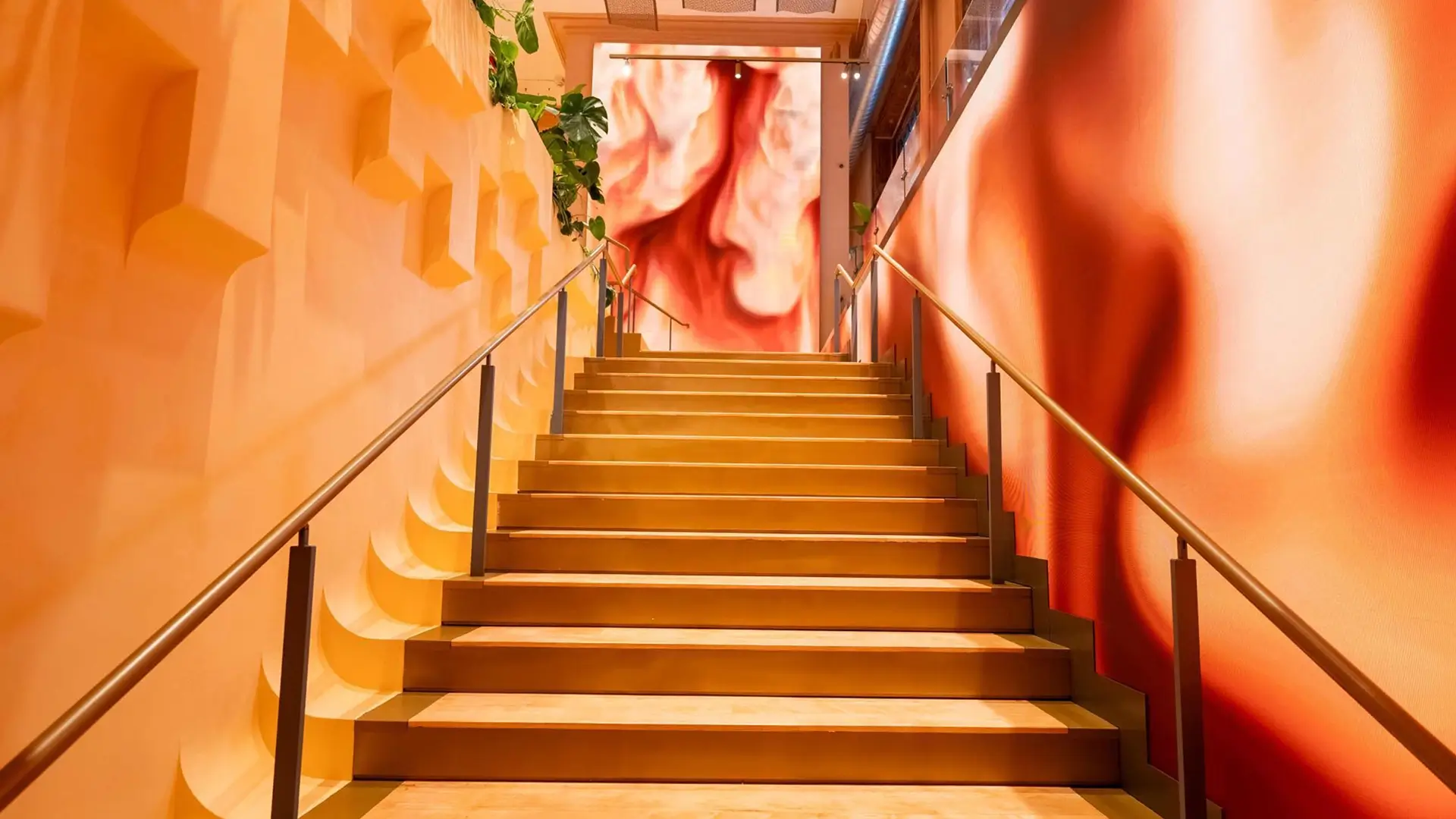
The Nespresso flagship in New York needed a video wall connecting its retail and experience zones. Its image had to remain calm and recognisable across long opening hours, with a response to people moving nearby.
The initial request was for pre-rendered content whose speed and movement would change with visitor proximity. Refractiv demonstrated a generative approach within the same spatial and visual brief. That demonstration became the basis of the installation.
Consider how long the image will be encountered
A pre-rendered sequence gives precise control over every frame. Its duration and progression are defined during production. Scheduling different assets can broaden the programme while preserving that frame-level authorship.
A generative system establishes rules through which the image develops. The artwork’s current state, internal simulation and selected inputs contribute to what appears next.
At Nespresso, visitors may pass, linger or return to the wall. Continuous behaviour suited that pattern of use. The artwork could maintain a consistent material identity while its composition developed with the simulation and nearby movement.
Author coffee and cream as a system
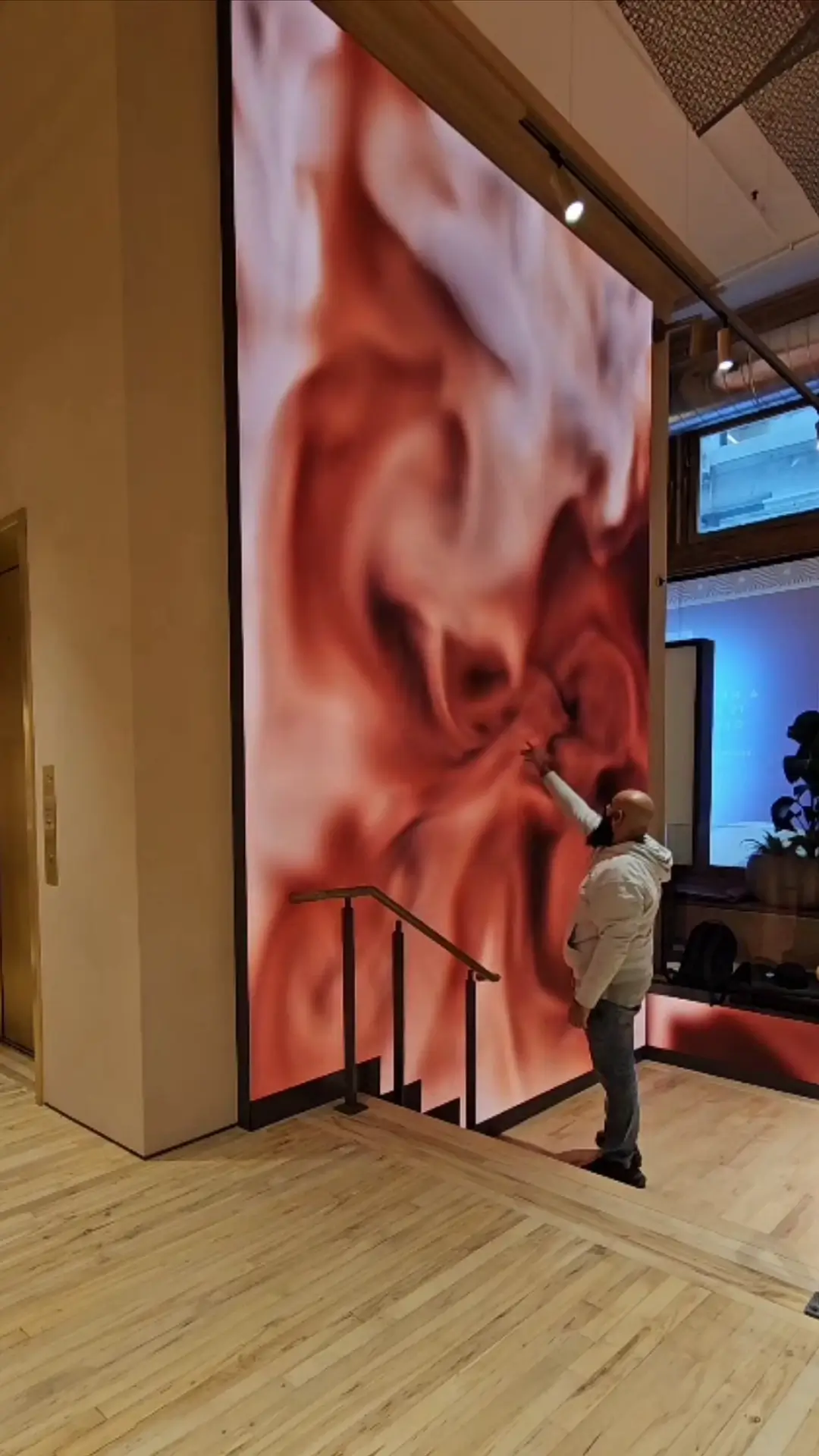
Refractiv developed a real-time fluid simulation, shaping its palette, motion, scale and response. Coffee and cream emerge, fold together and dissolve into the wider image.
The artistic decisions include the strength of forces, how motion dissipates and the range of influence given to a visitor. These limits are part of the artwork. They keep variations within its intended character as activity around the wall changes.
Generative here describes simulation and authored behaviour. The image is produced through the changing fluid system; it does not depend on a sequence of finished frames being replayed.
Keep interaction within the same material
The sensing layer combines computer vision and multiple LiDARs. Movement and proximity become forces in the fluid field, with nearby visitors gaining local influence.
Ripples, trails and wakes appear where that influence acts. They remain briefly before merging back into the composition. The response shares the artwork’s material and pace, allowing the image to continue while someone passes through the store.
The design therefore connects the sensing and visual systems closely. The location, strength and timing of an input all affect whether the interaction belongs to the image.
Carry the choice into operation
A generative installation needs software, settings and hardware that continue producing the work. With sensing involved, calibration also connects the observed space to the displayed image.
Refractiv’s scope included hardware specification, sensor layout, implementation and calibration. Commersive Solutions commissioned the project and led AV integration. Stingray provided the initial concept and pitch, and Bartolini/Lanzi Architects designed the architecture and interior.
For this type of installation, handover and any continuing support should address startup, diagnosis, configuration backups and recalibration. Those are responsibilities to define for the particular commission, alongside future content changes.
Let the brief determine the model
Fixed, generative and hybrid content each support different needs. A timed reveal may benefit from an exact sequence. A continuously encountered artwork may benefit from evolving behaviour. Live elements can also sit alongside fixed media where the experience calls for them.
At Nespresso New York, duration, material language and visitor influence supported a generative approach. The demonstration made that choice visible before it became the delivered system.
To explore a content approach for a space, contact Refractiv at Contact Refractiv.