

Begin with the space
A projected wall, a light ceiling and a responsive artwork each ask something different of a room. We consider the approach, viewing distance, circulation and programme before defining the role of each surface.
For a brand, venue or institution, this creates a shared starting point for the artwork and its delivery. The creative idea can develop alongside the architecture, with clear decisions about what people encounter and how the installation behaves.
Connect the parts
We define the relationship between image, light, sound where relevant, and interaction. A room may hold a quiet ambient state, change for an event or respond when people enter a particular area. Each state needs a purpose and a transition into the next.
That design also establishes interfaces between content, software, AV, fabrication and the building. It helps the project team decide who supplies, installs and operates each part.
Scope and outputs
| Area | Possible scope |
|---|---|
| Creative direction | Spatial concept, visual character and visitor sequence |
| Media design | Surface hierarchy, content roles and relationships between image and light |
| Behaviour | Ambient, responsive, scheduled, event and fallback states |
| Technical planning | Media and sensor layouts, signal paths, control ownership and system interfaces |
| Documentation | Coordinated drawings, equipment schedules, specifications and implementation guidance at the agreed level of detail |
The work can begin with an early concept or clarify an existing site. Detailed installation planning and handover can continue through Commissioning and Lifecycle Support (Commissioning and Lifecycle Support).
Starting a study
Bring a plan, a brief or an idea for the place. Useful questions include where people will encounter the work, how long they will spend with it and who will operate it. We can help define those decisions before a display format or content system is fixed.
Discuss a media study: Contact Refractiv.
Selected work
- Mercedes-Benz EQS: Spatial and media direction for a commissioned pavilion concept.
- Nespresso New York interactive video wall: Generative artwork and interaction developed for a flagship video wall.
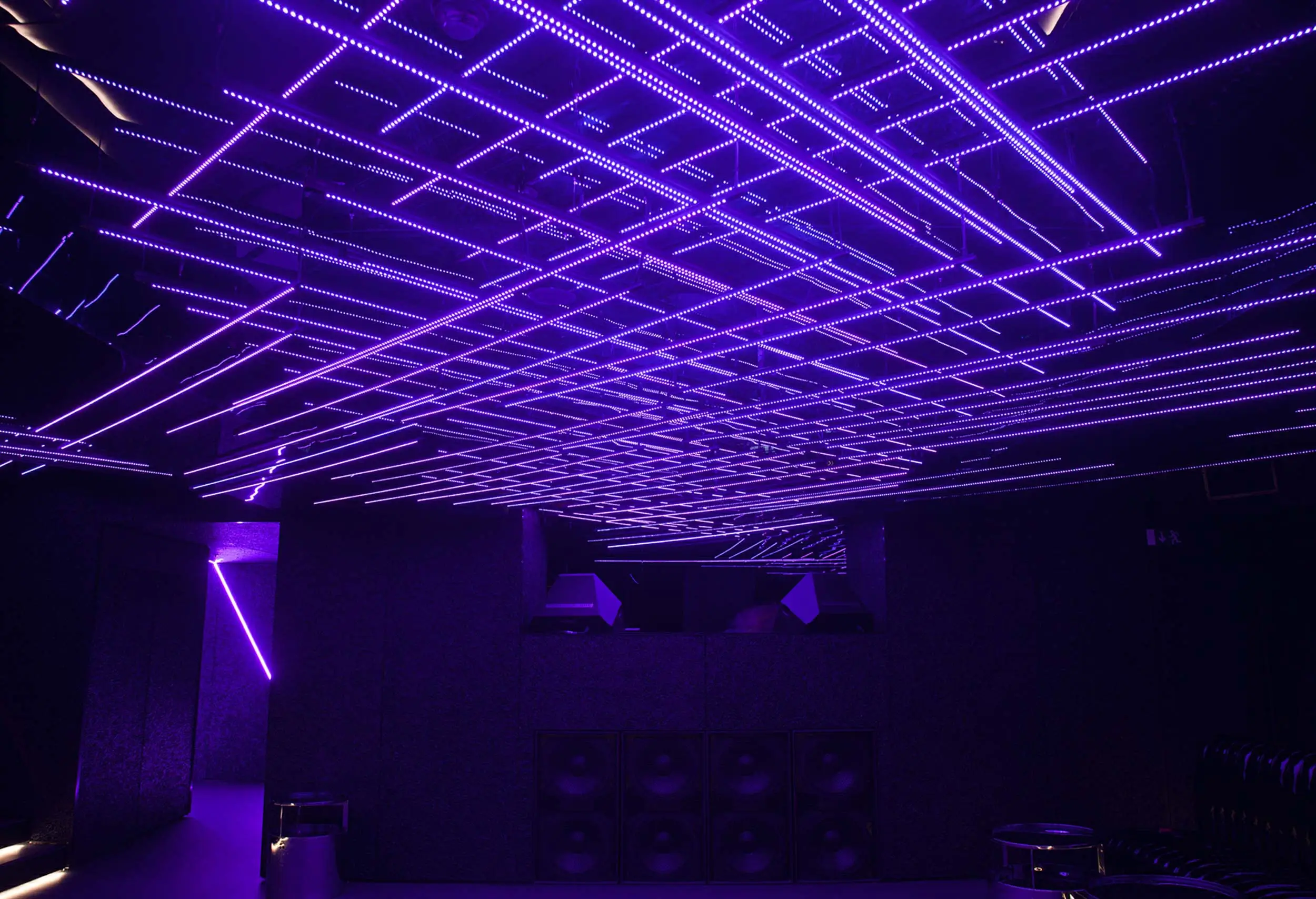
- DND Amsterdam: Dancefloor lighting conceived around a low ceiling and mirrored depth.