
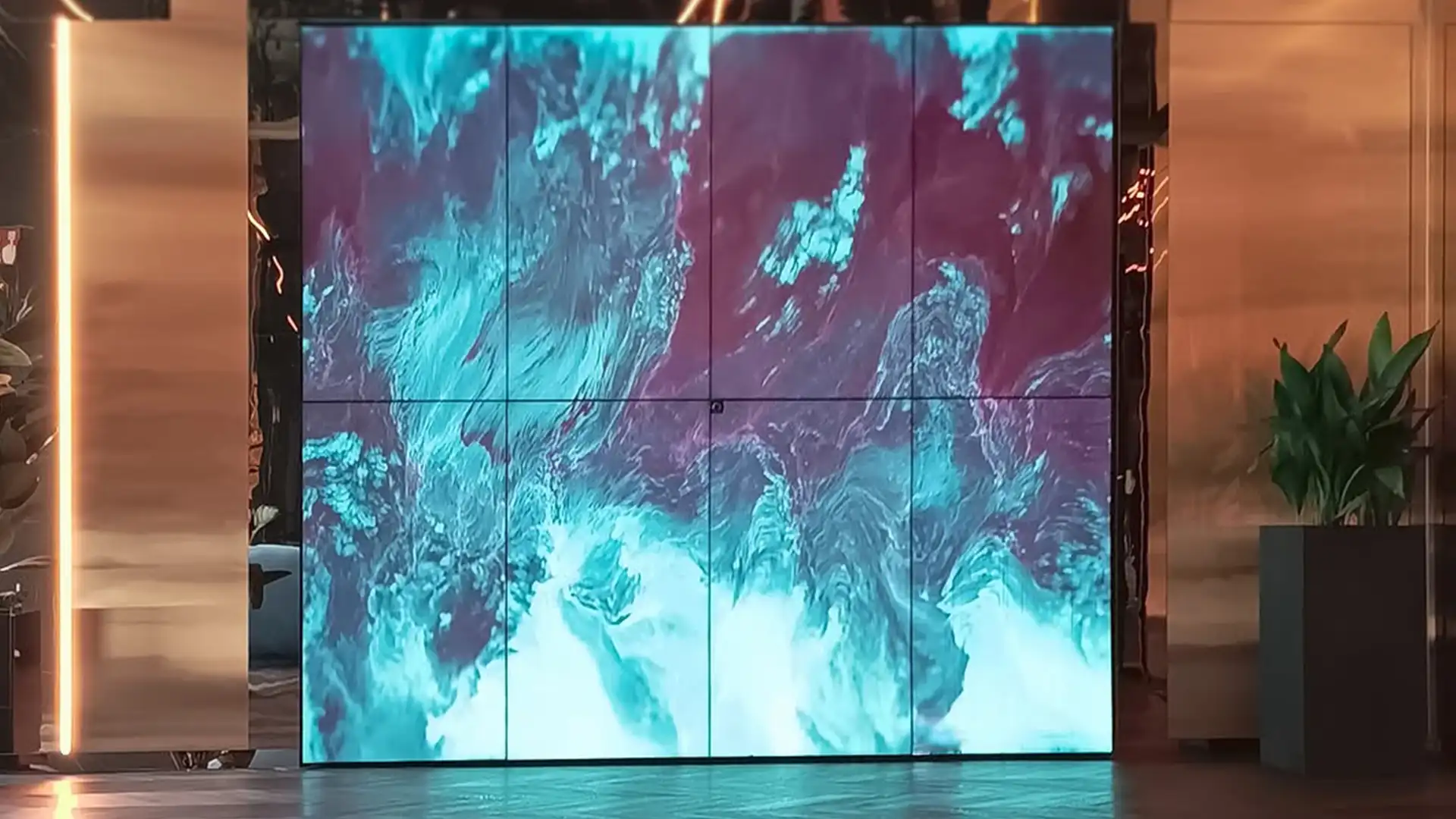
Author the visual language
In a generative work, composition develops over time. We define its palette, forms, scale and movement, then build the relationships that allow the image to change while retaining its character.
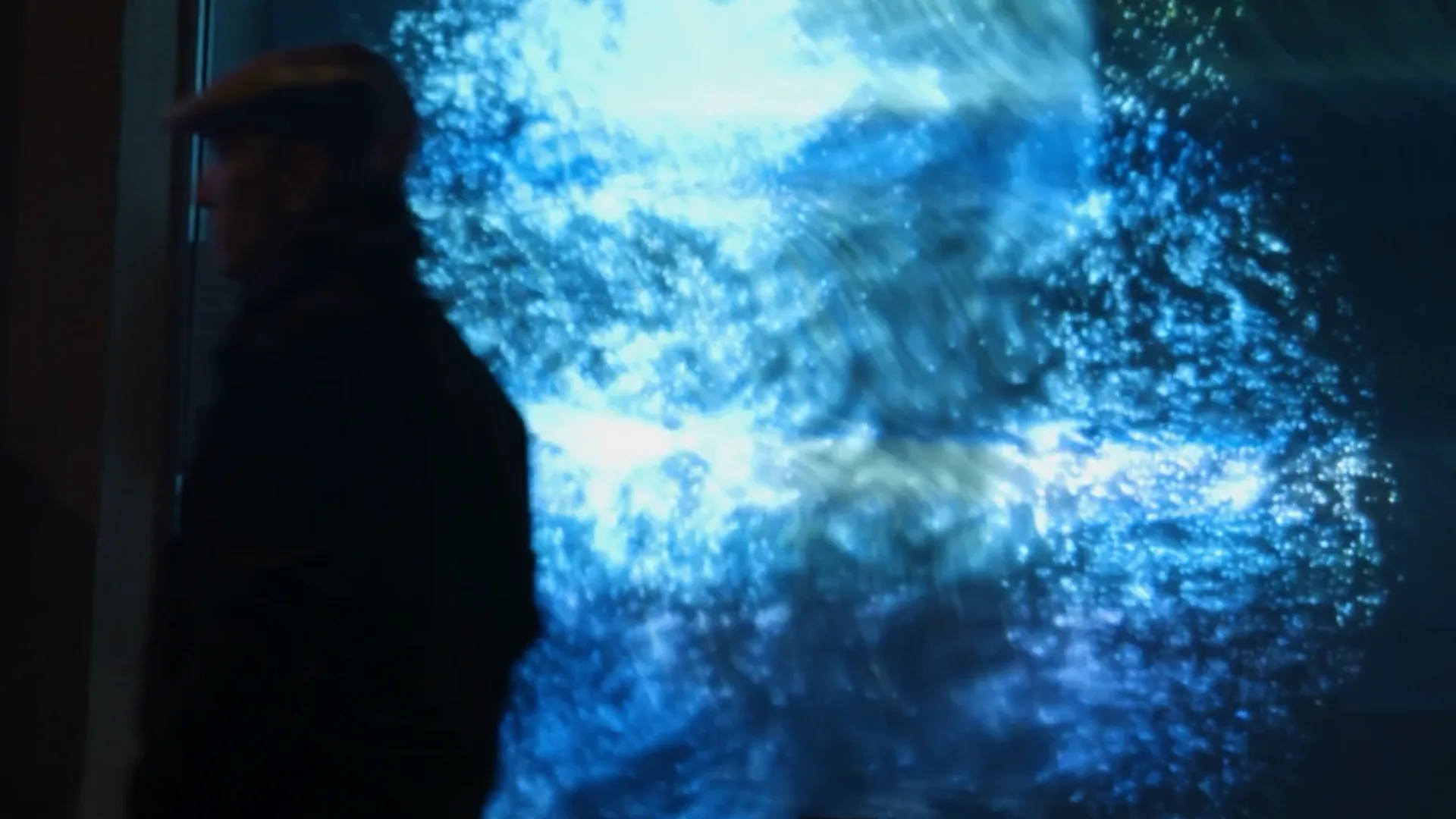
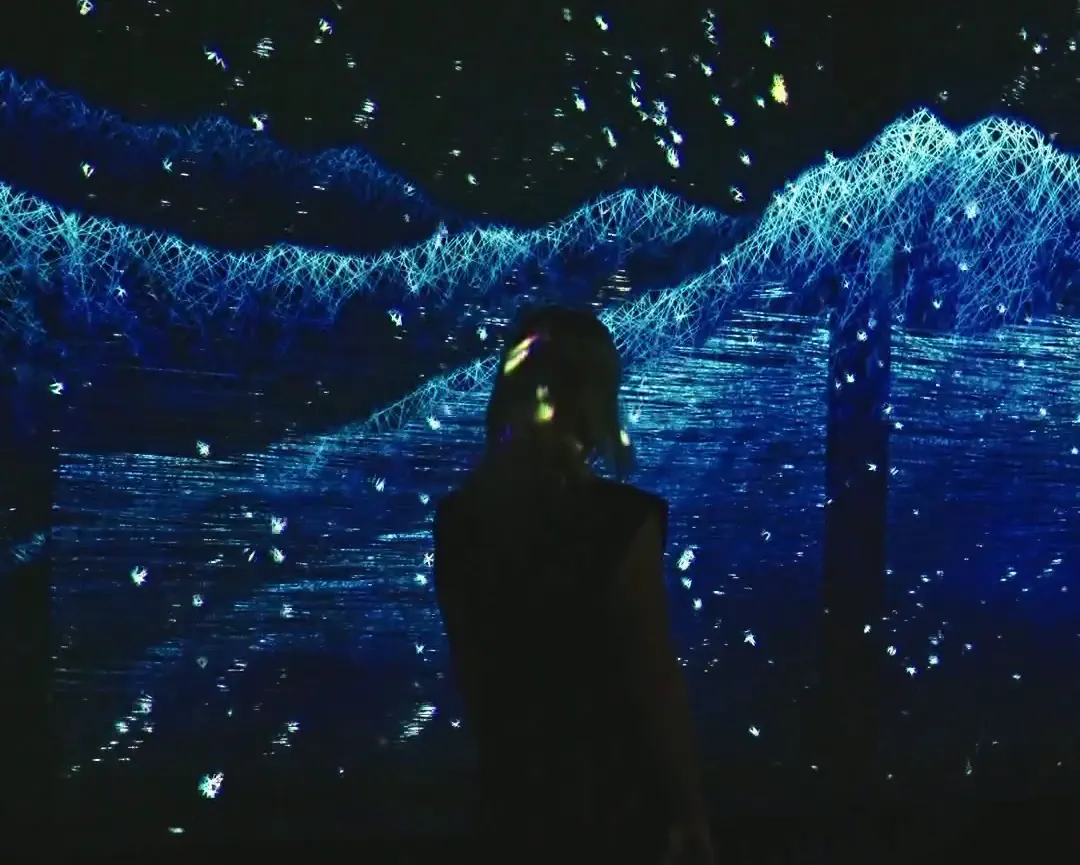
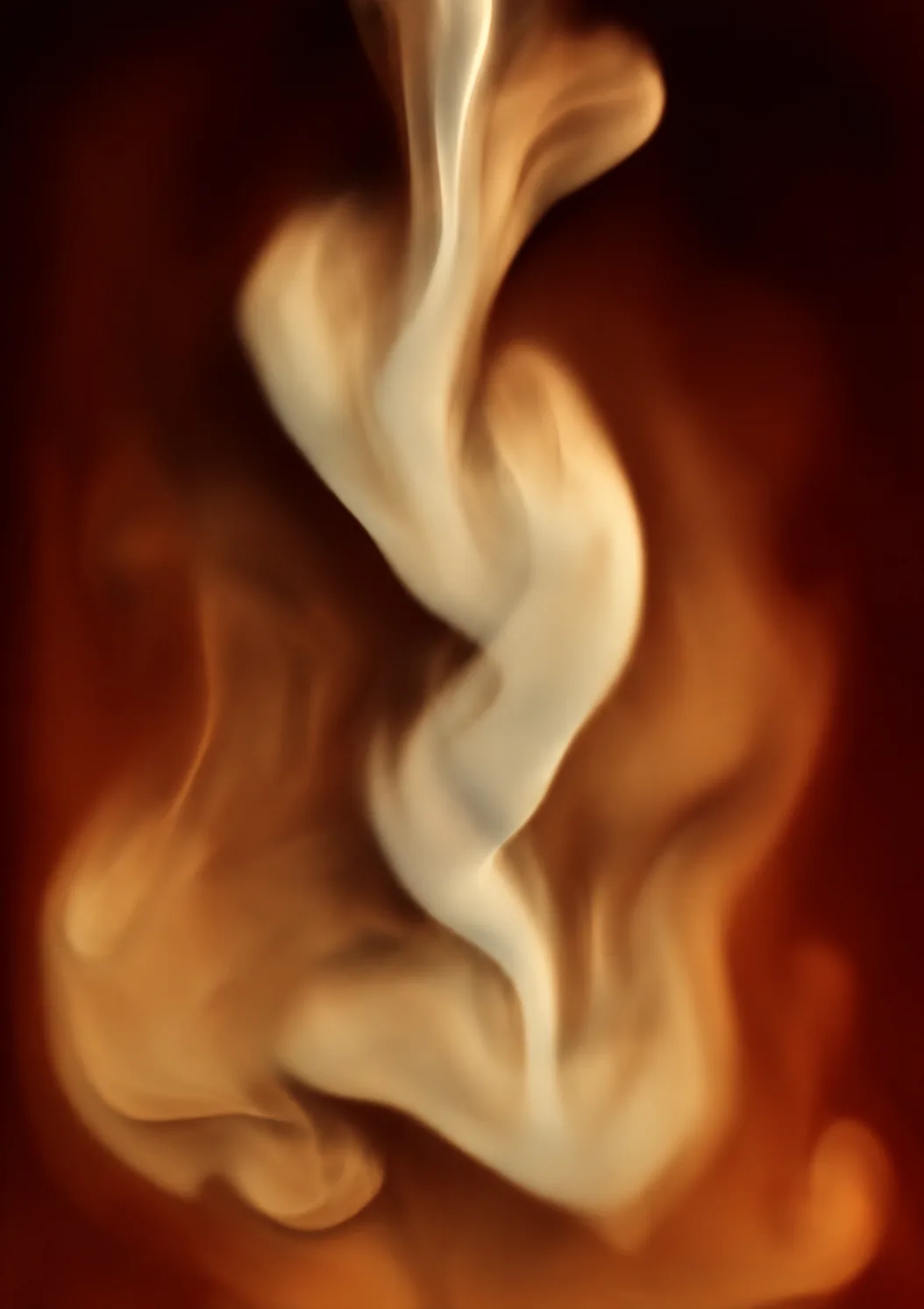
At Nespresso New York, coffee and cream fold through a fluid simulation. In Ondulations, waves of light respond to pedestrians along a glass facade. Each has its own material and rhythm, expressed through the rules of the system.
Decide what can change
Some works evolve through internal simulation. Others respond to people, environmental data, scheduled cues or operator choices. Those inputs influence selected properties of the image within an authored range.
Art direction and development progress together. A working study lets us judge the look of the image alongside its behaviour, including quieter periods and more active conditions.
Scope and outputs
| Area | Possible scope |
|---|---|
| Art direction | Palette, form, motion, composition and temporal character |
| Generative design | Rules, parameter ranges, states and transitions |
| Software | Real-time rendering, shaders, simulation and input handling |
| Integration | Sensing, data, display, projection and control interfaces |
| Deployment | Output setup, performance tuning, startup and recovery |
| Handover | Application build, controls, configuration and documentation |
Develop for the actual surface
Scale, resolution, colour and viewing distance affect the artwork. We prototype against the intended output and test the relationship between input and visible response. Site calibration then brings the approved work into its installed setting.
Generative simulation, AI image generation and procedural production for fixed video are different approaches. The brief determines which is useful and what needs to remain adjustable after delivery.
Discuss a generative visual system: Contact Refractiv. For an artwork-led introduction, see Generative artwork (Read more ↗).
Selected work
- Nespresso New York interactive video wall: Real-time coffee-and-cream fluid simulation.
- Ondulations Luxembourg: Generative waves influenced by pedestrian movement.
- Cardo Brussels: AI-generated landscapes and reinterpreted guest portraits.