
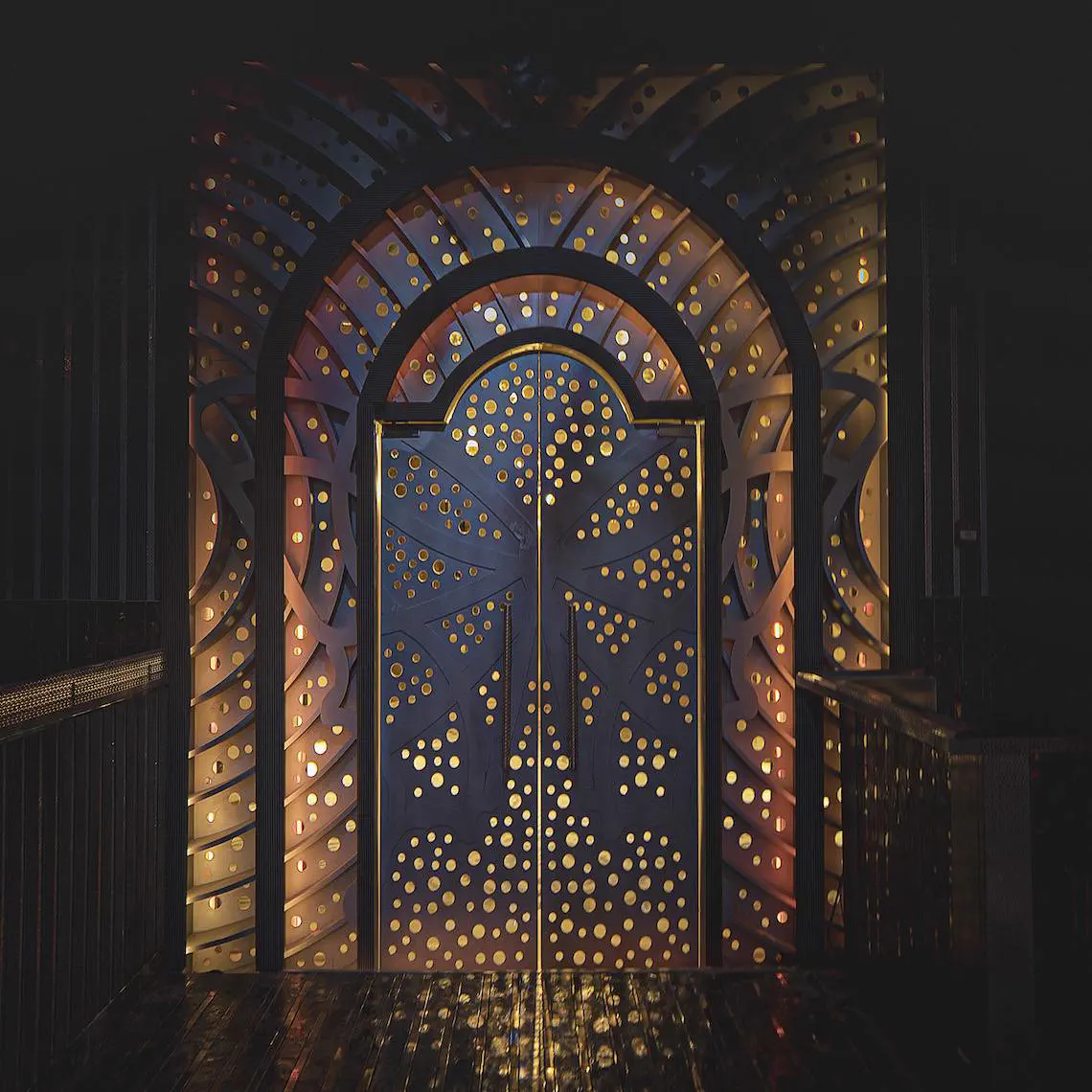
Start with form and reflection
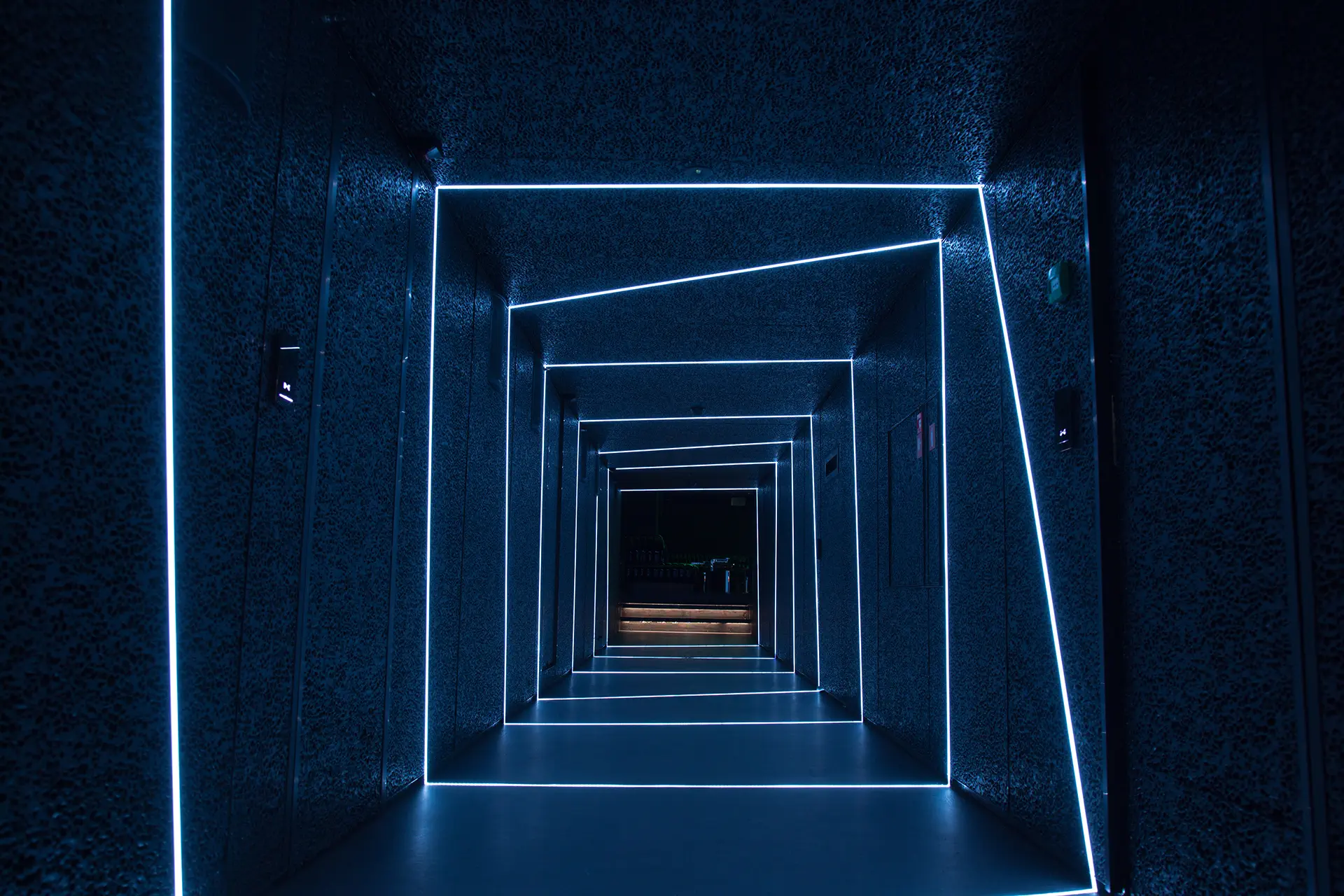
Before a light changes colour, its position and the materials around it shape what people see. A line reflected in a mirror can extend a low ceiling. A repeated structure can connect rooms or mark an approach.
We develop lighting concepts around those spatial effects, then give the structure its movement. The work can use custom fixtures, addressable elements or light integrated into architectural details.
Compose change over time
Colour, intensity and timing define how the installation behaves. Gradients can travel through a three-dimensional layout, scenes can change with a venue’s programme and selected inputs can introduce a response.
Programmed lighting, sound-reactive modes and presence-driven interaction serve different purposes. We choose them according to the brief and develop transitions that fit the room’s scale and pace.
Scope and outputs
| Area | Possible scope |
|---|---|
| Creative direction | Spatial role, form, colour, rhythm and atmosphere |
| Physical design | Fixture intent, placement, density and relationship to materials |
| Control | Addressing, pixel mapping, system interfaces and operator controls |
| Programming | Scenes, transitions, response and fallback states |
| Coordination | Work with fabrication, electrical, lighting and AV teams |
| Delivery | Behaviour maps, specifications, calibration and operating guidance |
Light in daily use
The people operating a venue need a clear way to recall scenes and manage changes. Controls, startup, recovery and documentation are developed around their skills and the installation’s use. Responsibilities for physical installation and continuing support are agreed for each project.
Discuss a light installation: Contact Refractiv. For a venue-specific brief, see Club lighting design; for input-driven behaviour, see Interactive lighting.
Selected work
- DND Amsterdam: Custom addressable lights and mirrors extend perceived depth.
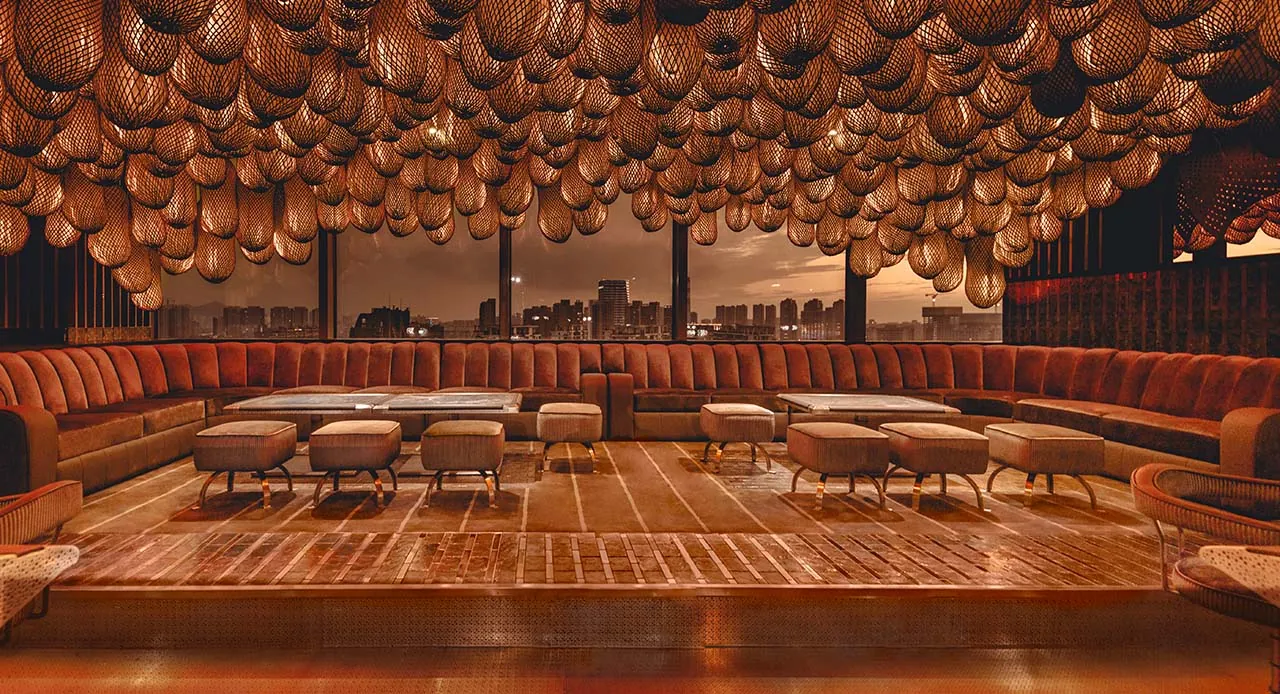
- Morph Rooftop Bar: A collaborative lighting concept with ambient, event and sound-reactive states.
- Mercedes-Benz EQS: Programmable light within a commissioned pavilion concept.