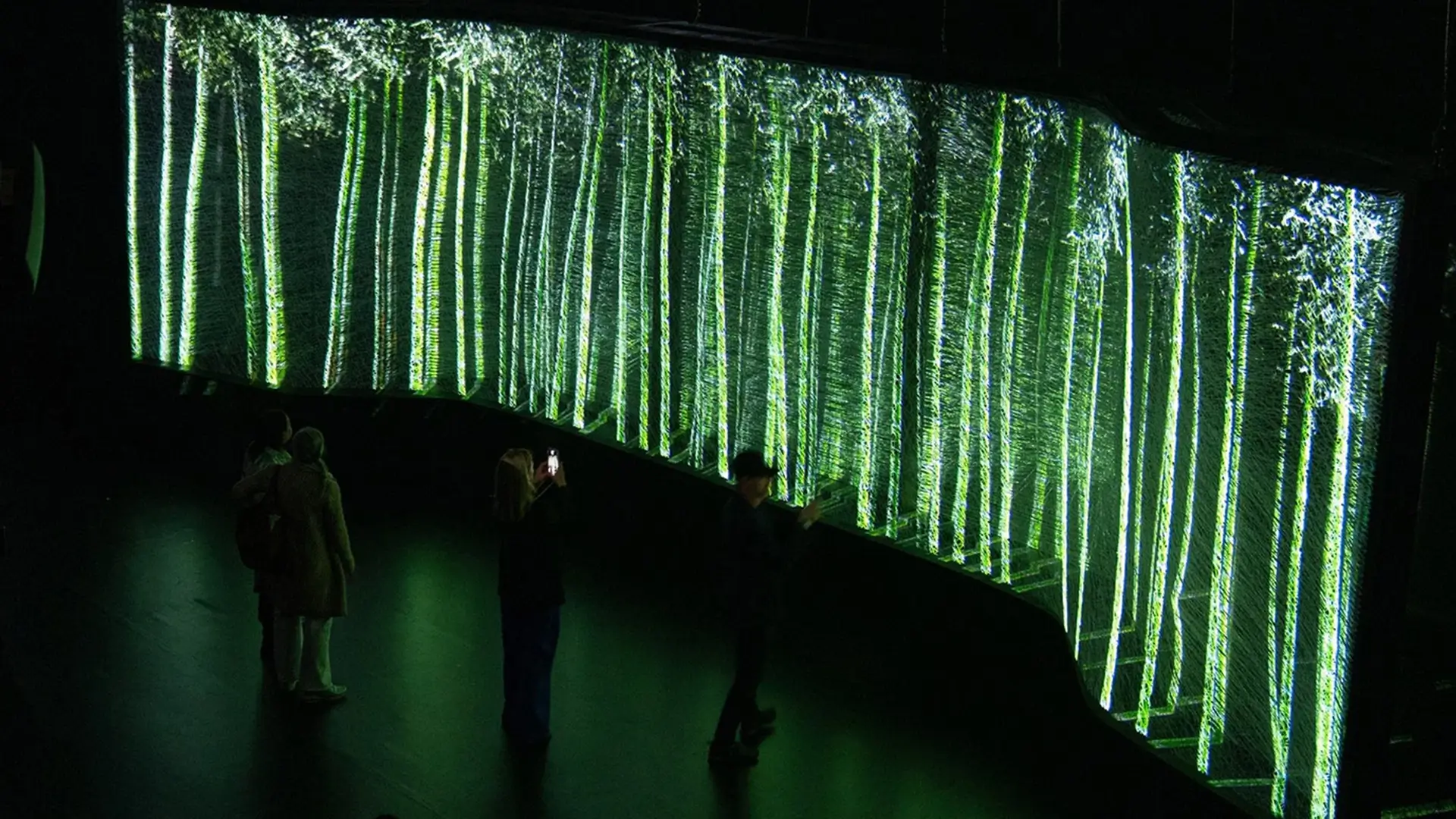
A complete spatial composition
An immersive environment is experienced as a whole. Architecture, image, light, sound and interaction contribute to one spatial composition, with each layer supporting the same atmosphere, sequence and rhythm.
Refractiv defines how that composition receives people, how it changes as they move through it and how the media system supports the intended character of the space. The work connects creative direction with the software, sensing, control and technical design required to operate the environment.
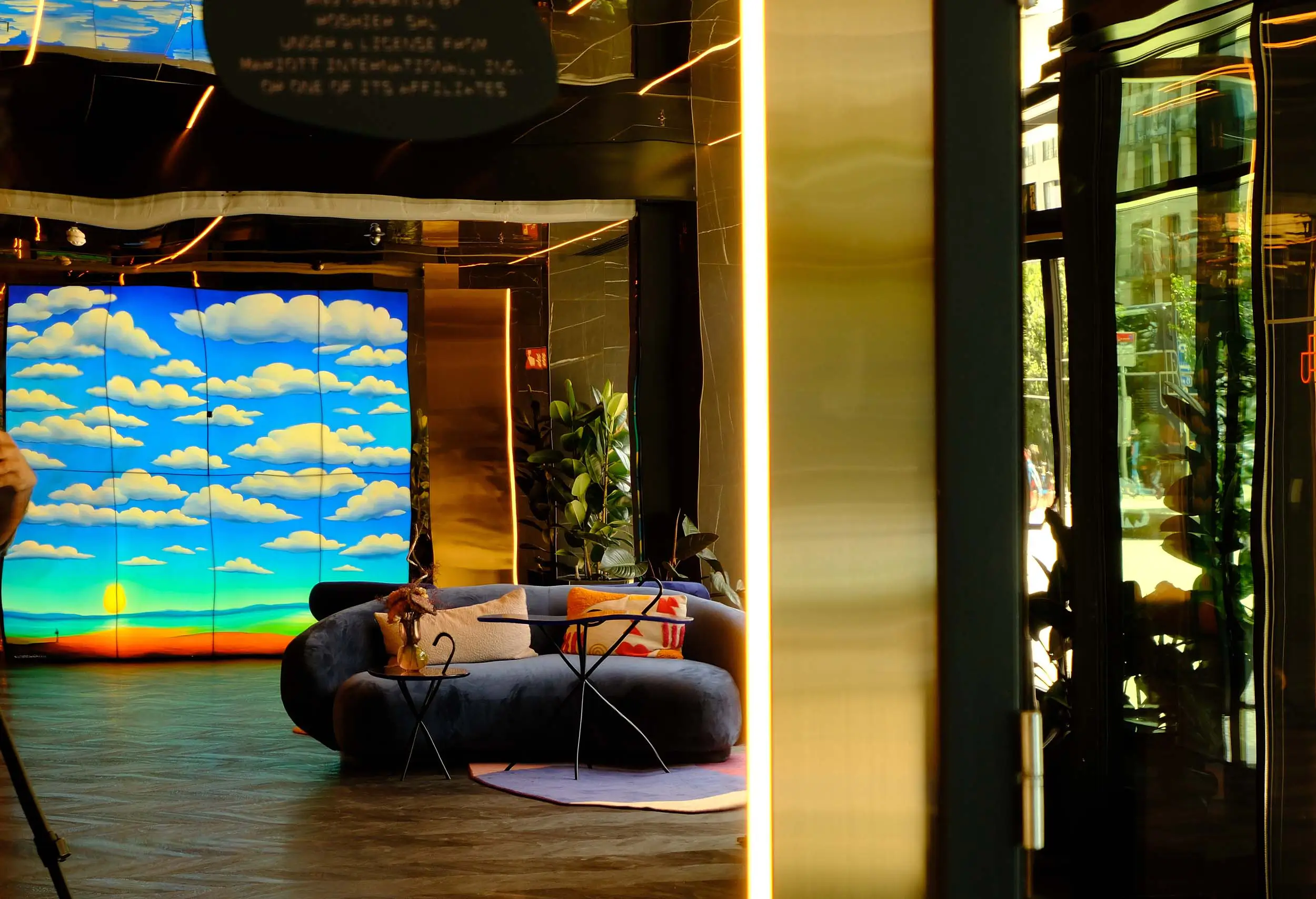
Designing how the environment behaves
The environment can hold a calm ambient state, register proximity or dwell, respond to groups and events, and shift across time, programme or operating conditions. These states are designed as one behavioural system, with clear transitions and a stable visual identity.
Spatial sequence remains central. Media can draw attention, establish orientation, build intensity, open moments of interaction or create a continuous atmosphere across the room.
Scope and outputs
| Area | Refractiv scope |
|---|---|
| Creative direction | Spatial narrative, atmosphere, visual language and visitor sequence |
| Experience behaviour | Ambient, responsive, scheduled, event and fallback states |
| Media composition | Relationships between display, projection, light, sound and physical surfaces |
| Interaction design | Presence, movement, dwell and other inputs mapped to clear spatial responses |
| Technical development | Real-time software, sensing architecture, control logic, prototyping and calibration |
| Delivery coordination | Design information and integration direction for architects, agencies, AV teams, fabricators and venue operators |

Connected disciplines
Immersive environments combine several capabilities within one commission. Media Architecture establishes the overall system. Sensing and Spatial Response supplies behavioural input. Generative Visual Systems and Responsive Light Works shape the visible output. Commissioning and Lifecycle Support verifies the complete environment under site conditions.
Refractiv can carry these layers as one scope or collaborate within a broader architectural, cultural or production team.
Applications
Immersive environments are developed for museums, cultural institutions, exhibitions, brand spaces, corporate and visitor environments, hospitality, retail, public installations, pavilions and events. Relevant examples include Nespresso New York, Cardo Brussels and Lexus A-Un at Milan Design Week.
Selected project evidence
Nespresso New York: Generative visual environment whose fluid behaviour responds to visitor movement within the store.
Cardo Brussels: Interactive lobby media environment combining live portrait capture, real-time visual processing and environmental data.
Lexus A-Un, Milan Design Week: Real-time projected visual layer developed within a biometric installation, moving the space through a seasonal colour sequence.
For an immersive environment, responsive media room or spatial installation, contact Refractiv.


