Interactive Installations for Retail

Interactive installations for retail that respond to movement, atmosphere, and dwell as part of the spatial experience. Spatial systems designed to feel continuous with the room and legible as brand identity.

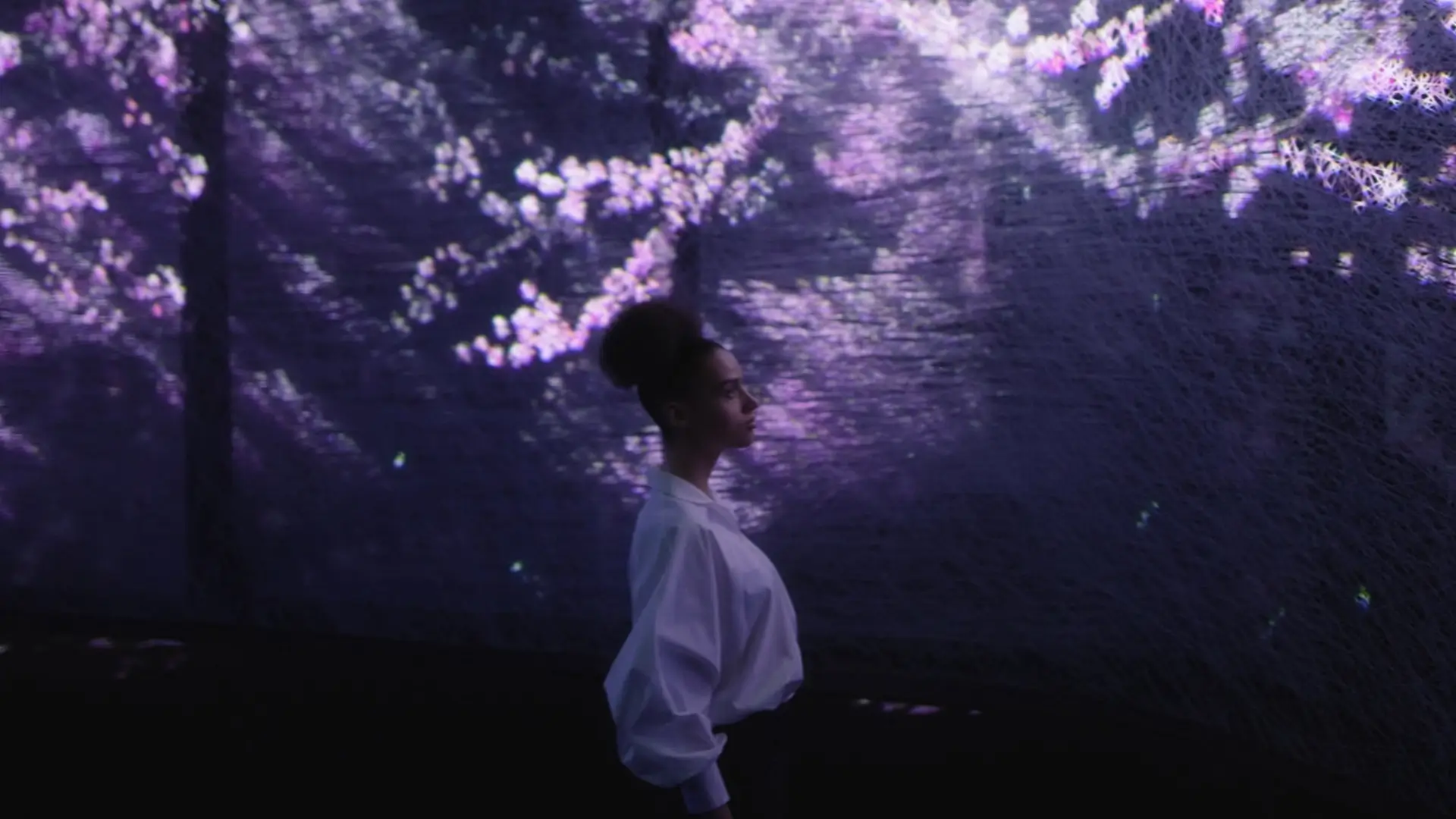
Interactive video wall for a flagship retail environment with sensing and real-time visual behaviour

Retail space is no longer static. Surfaces, light, and media can respond to the room as it changes through the day, creating a retail environment that feels alive, composed, and materially aligned with the space. We approach these systems as living spatial systems: media that holds a space, shifts with occupation, and gives form to the identity of a brand in physical space.

In this context, interaction works through passive response embedded in the room. The most effective responsive retail installations follow movement already present in the space. A visitor slows down, changes direction, gathers around a product zone, or simply passes through. The system reads that choreography and translates it into visual behaviour, changing the room through movement, dwell, and proximity. The result is a visual condition that breathes with the space.

Nespresso New York interactive retail installation detail

This matters most in environments built for repeat visits. Staff see the same room every day. Returning customers pass the same surfaces on every visit. A responsive system for this context holds attention over long opening hours through authored variation, controlled behaviour, and architectural integration. It carries the tone of the space across repeated visits while continuing to generate new compositions.

Spatial sensing

A responsive retail installation depends on a sensing layer that works continuously as part of the spatial system. Computer vision, depth sensing, or overhead tracking can read movement, dwell, proximity, and crowd density. Those signals become inputs to content behaviour, shifting tempo, colour density, compositional weight, and local visual response. The interaction remains spatial and environmental.

At Nespresso New York, a computer vision layer reads how visitors move through the flagship store and feeds that choreography into a generative fluid system. Coffee and cream form a slow visual language that continuously emerges and dissolves across the video wall. The wall behaves like a digital painting in motion, shaped by the life already present in the room.

At Rolls-Royce Beijing, the brief was different: a storefront projection that transforms the facade into a visual reveal surface. Procedural 3D content gave the boutique a shifting exterior presence on Jinbao Street. The Nespresso wall draws behaviour inward around dwell, while the Rolls-Royce surface gives the brand a changing public presence in real time.

Both replace loops with systems that produce form continuously. Both are authored through rules and real-time behaviour. Both treat the media layer as part of how the space is read and experienced.

The approach applies to luxury retail, concept stores, showrooms, brand museums, and any environment where media becomes part of the architecture and the spatial experience.

Nespresso New York interactive retail installation final detail