

Decide what the light should notice
A person entering a passage, music changing in a room or an event cue can each influence a lighting installation. The useful starting point is the response: what should change, where it should happen and how people will understand it.
We develop the physical structure and the behaviour together. The positions of the lights, surrounding materials and viewing distances determine how a response appears in the space.
Shape the change
An input might alter intensity, shift a colour field or send movement along a series of fixtures. Filtering, thresholds and transition timing help keep the change legible and consistent with the work’s character.
Programmed scenes and interactive response can coexist. The installation can hold an ambient state, respond within selected limits and return gradually after activity ends. Controls for staff belong in that design too.
Two useful lighting precedents
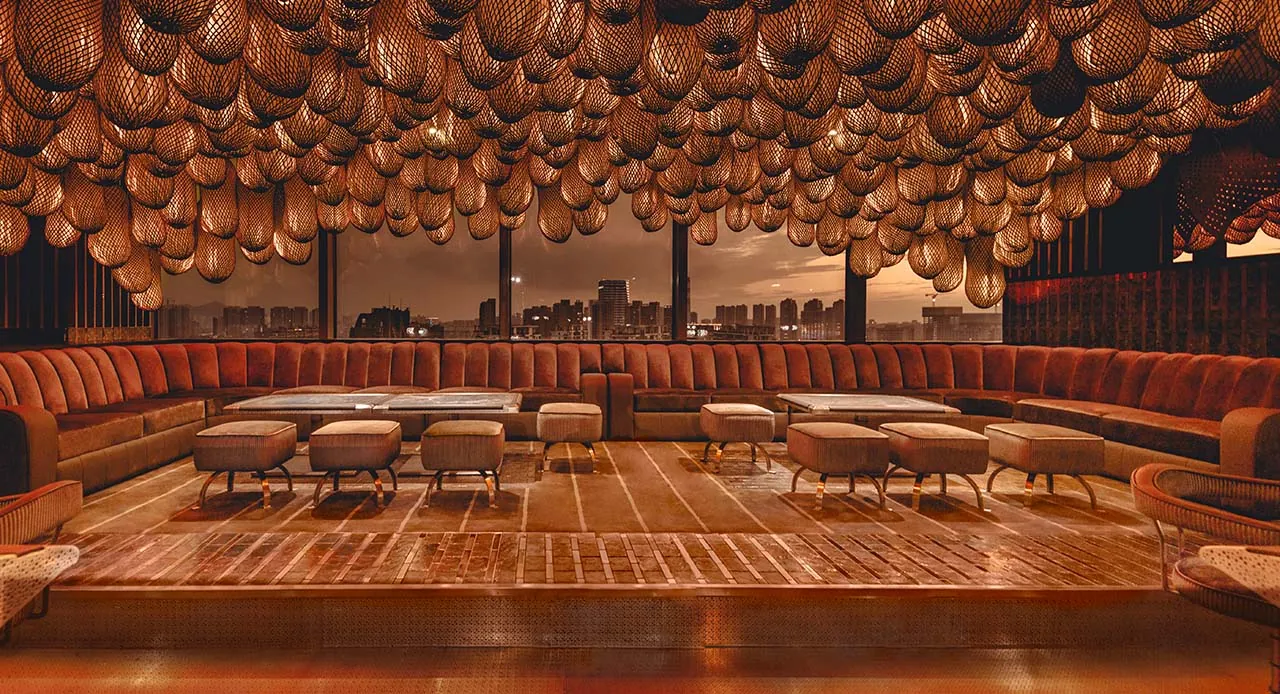
Morph Rooftop Bar combines programmed states with sound-reactive modes. Its addressable light extends across three zones, allowing music and motion to share a spatial composition.
DND Amsterdam demonstrates the physical side of that design: custom bars and mirrors form a layered ceiling that changes through pixel-level programming. It is a reference for geometry and control, without assuming a visitor-sensing function.
Define the brief
Useful inputs include the room’s plans, the activity to detect, the intended atmosphere and the operator’s needs. We can develop fixture strategy, control layout, response rules and a prototype before final calibration on site.
Discuss an interactive light installation: Contact Refractiv.