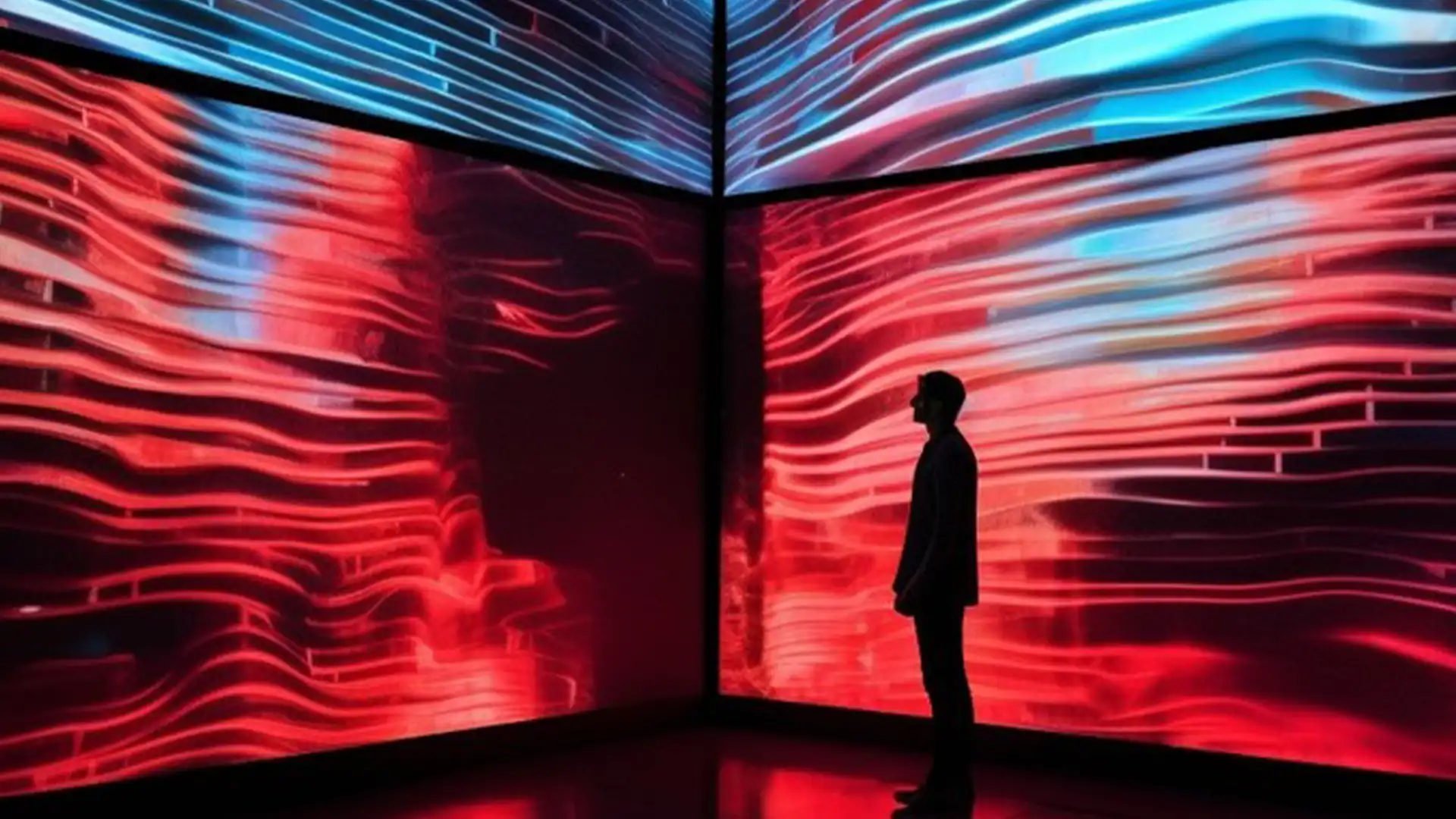
Algorithmic artwork that produces form in real time. Never-repeating, interaction-ready, data-responsive. Each installation is an authored visual system shaped by the conditions of its space.
A generative art installation produces its visuals in real time through an authored algorithm. There is no video file, no loop, no fixed duration. The system keeps generating form for as long as it runs, and it never repeats. What the viewer sees at any given moment is a unique composition that will not occur again.
This is possible because the artwork is not a recording. It is a set of authored rules that govern how visual elements behave: how they emerge, move, interact, dissolve, and respond to conditions around them. The algorithm is the artwork. The output is its continuous expression.
Why it works for installations
Pre-rendered content has a fixed length. Play it on a wall in a lobby, a retail space, or a showroom, and eventually it loops. Staff notice first. Returning visitors notice next. The content stops holding attention because the room already knows what comes next.
A generative system avoids this entirely. It can run for hours, days, or months and still produce visual change that feels intentional and composed. This makes generative art particularly suited to spaces with long operating hours, repeat visitors, and environments where the visual layer needs to carry presence without becoming predictable.
Generative artwork can also be interactive. Visitor movement, proximity, dwell, biometric input, or environmental data can shape how the visuals behave. The interaction does not need to be literal or screen-based. It can be spatial: the room changes because people are in it.
It can also be data-driven. Time of day, weather, occupancy, scheduled events, or live feeds can influence the visual state. The result is artwork that registers the conditions of its space rather than ignoring them.
Authored, not random
The most common misunderstanding is that generative means uncontrolled. It should not. The authored part of a generative art installation is the grammar of the visual system: what can vary, what stays stable, how transitions unfold, how far behaviour is allowed to drift. Without those boundaries, the result looks arbitrary. With them, it looks alive.
This is where the artistic direction sits. The visual language, the palette, the rhythm, the compositional logic, the relationship between movement and stillness. All of it is defined through the algorithm. What changes is what the space gives the system to work with.
Research and development
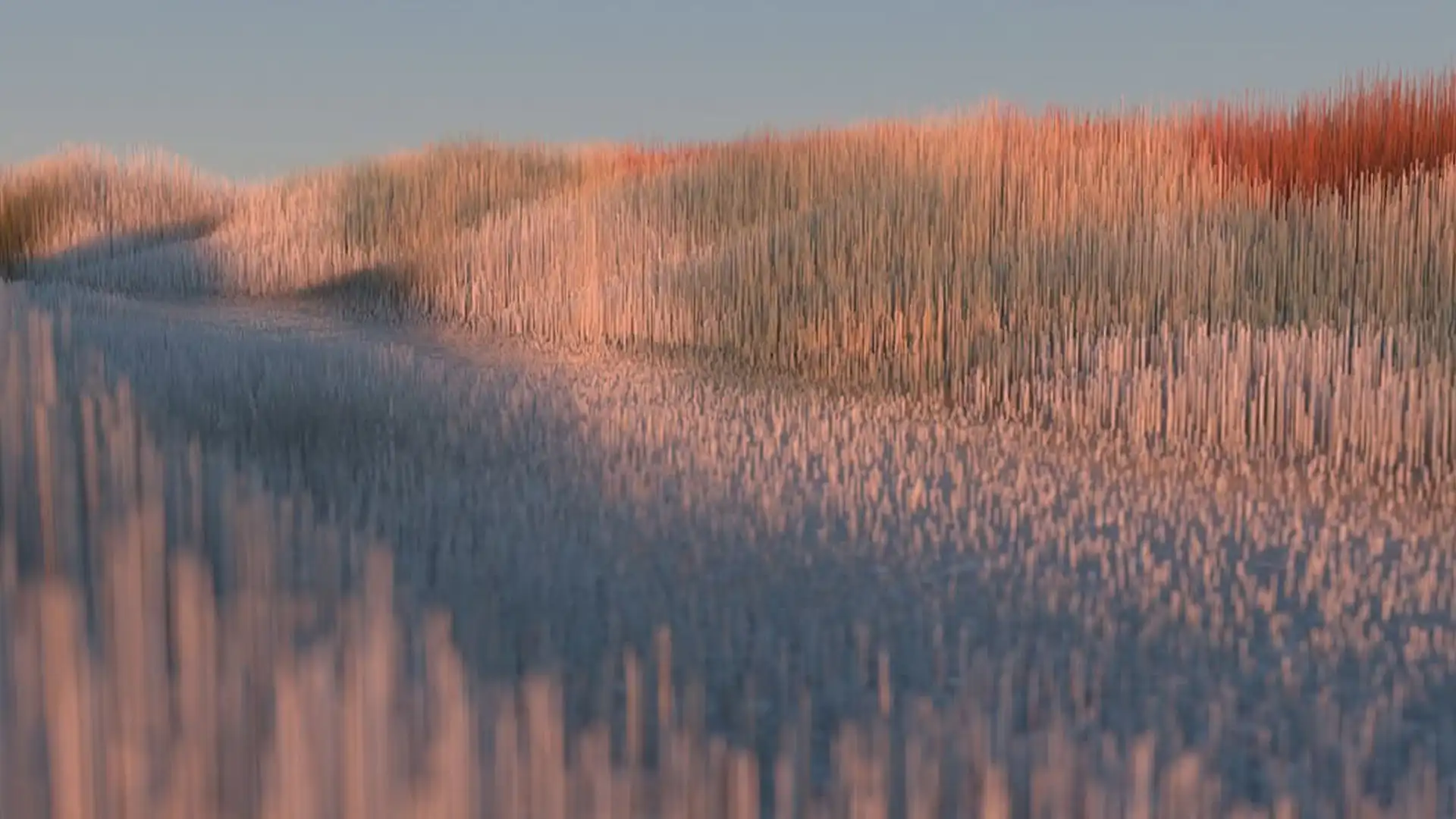
Each generative art installation begins with visual research. New visual behaviours, material qualities, and interaction patterns are developed through continuous experimentation before they enter a commissioned project. This process produces the visual vocabulary that a project draws from.
The R&D work runs in parallel with commissions and feeds new forms, techniques, and algorithmic approaches into the practice. Below are two examples of that process.
Experimental visual systems exploring algorithmic form, material behaviour, and procedural composition. These studies inform the visual language of commissioned generative art installations.
Selected projects
At Lexus Milan Design Week, biometric input shaped a generative art installation across a translucent projection surface. Visitor presence drove real-time changes in light, colour, and animated form. At Nespresso New York, a computer vision layer read visitor movement through the flagship store and fed it into a generative fluid system. Coffee and cream formed a slow visual language across the video wall, shaped by the life already present in the room. At Rolls-Royce Beijing, procedural 3D content gave the boutique a shifting exterior presence through facade projection, with the generative system producing continuous visual change on Jinbao Street.
Commissions, collaborations, and scoping conversations through the contact page.