

Think from inside the image
When projection surrounds people, each viewpoint reveals a different composition. Walls, translucent surfaces and architectural volumes become part of the image, and movement through the space changes how it is perceived.
We develop content with those viewpoints in mind. Scale, density and motion need to work at the distance people will actually experience them.
Give the field a rhythm
The projected world can unfold through a composed sequence or develop in real time. A response to people may change selected parts of the image while the environment keeps its broader atmosphere.
At Lexus A-Un, translucent threads carried seasonal colour around a butterfly form. Refractiv created the butterfly visual layer; Aircord supplied the biometric, projection and control framework that connected it to the wider installation.
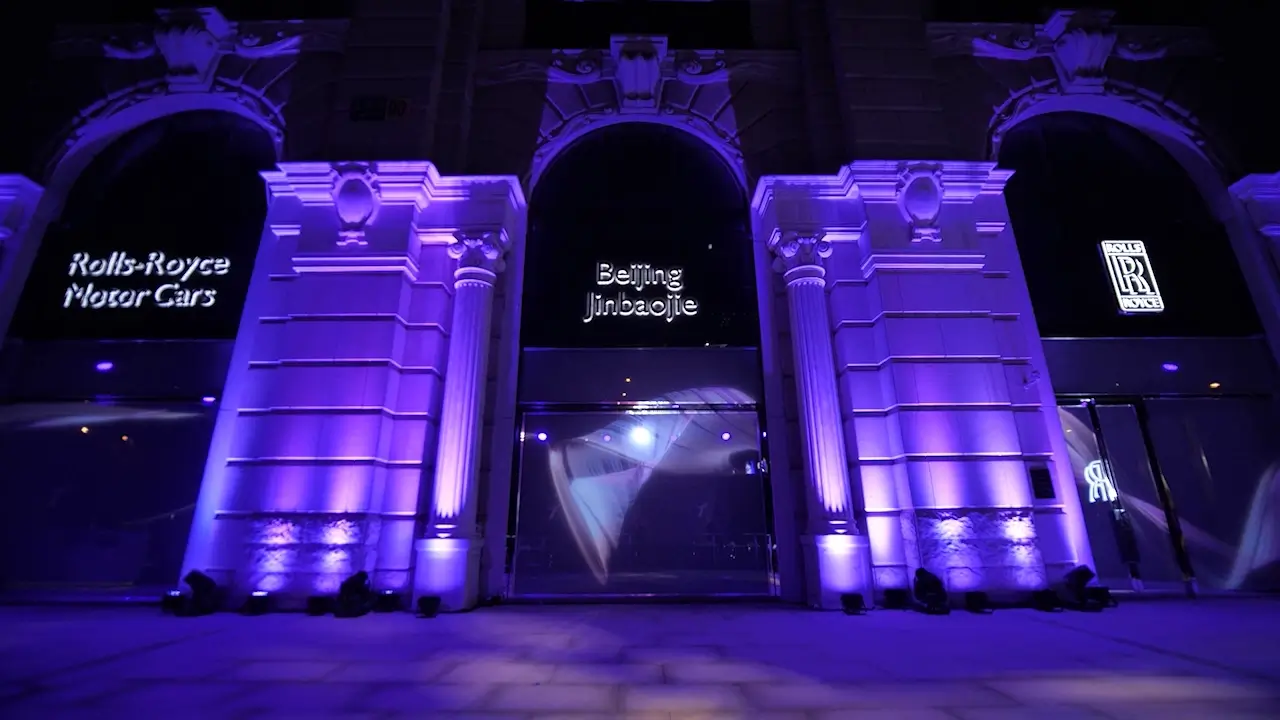
Coordinate the surrounding elements
Projection may share a space with light, sound and other media. The concept needs to define where attention belongs and how these elements change together.
Surface geometry, ambient light, sightlines and projection positions affect the technical approach. The scope can include content, mapping direction and system coordination, with installation and calibration responsibilities established with the delivery team.
Frame the brief
Share the room or structure, audience capacity if known, presentation duration and the story or atmosphere you want to develop. An early site study can help determine the useful surfaces and the content model before production begins.
Discuss an immersive projection: Contact Refractiv.