
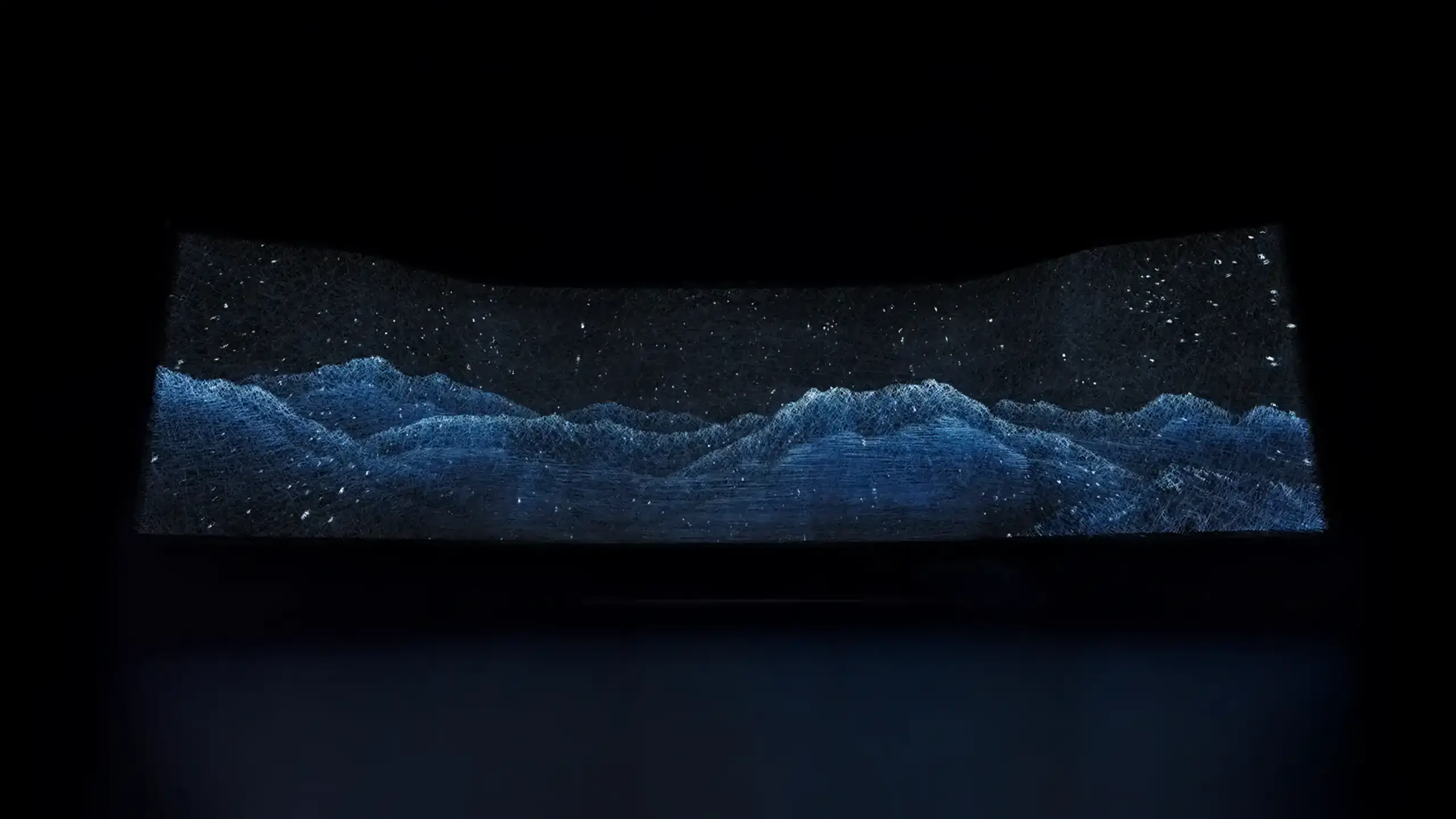
Real-time visuals for Lexus
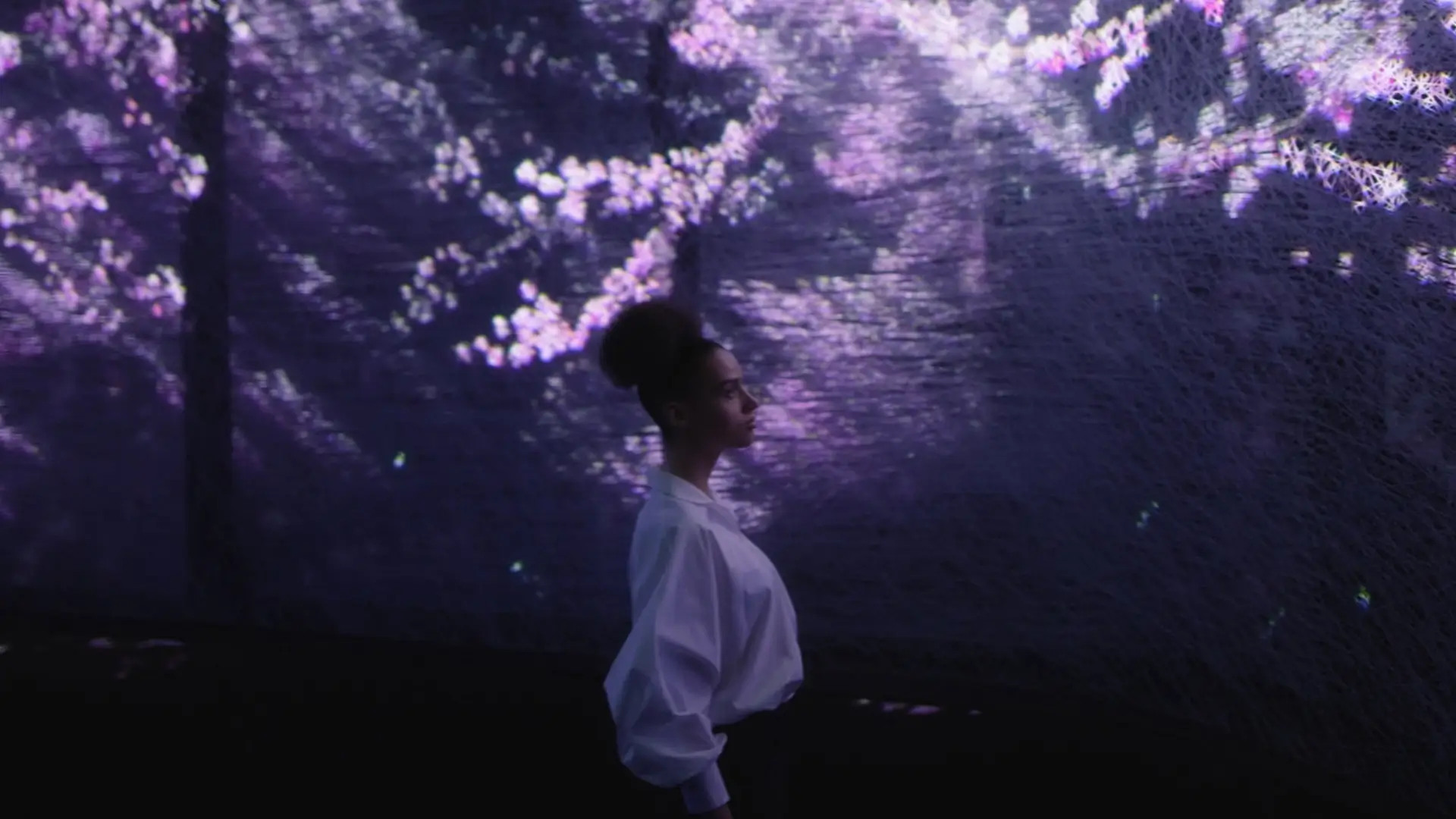
At Milan Design Week, the projection surface for Lexus A-Un was a translucent butterfly woven from 35 kilometres of thread. As light moved across the butterfly, it picked out individual threads and gave the projected image depth. A sequence of four seasons took the colour from the sakura pink of spring through summer and autumn to winter white.
The installation took its name from A-Un, an expression for people acting in harmony without needing words. Shared heartbeats gave the room a rhythm of expansion and contraction. Movement also influenced the projected light and spatial audio around the butterfly.
Our part was the interaction design and the butterfly visuals. We animated and programmed them in TouchDesigner. Biometric signals could change the colour and the movement of the projected light within each season. A change in the audience had to register on the thread while the season under way was still recognisable.
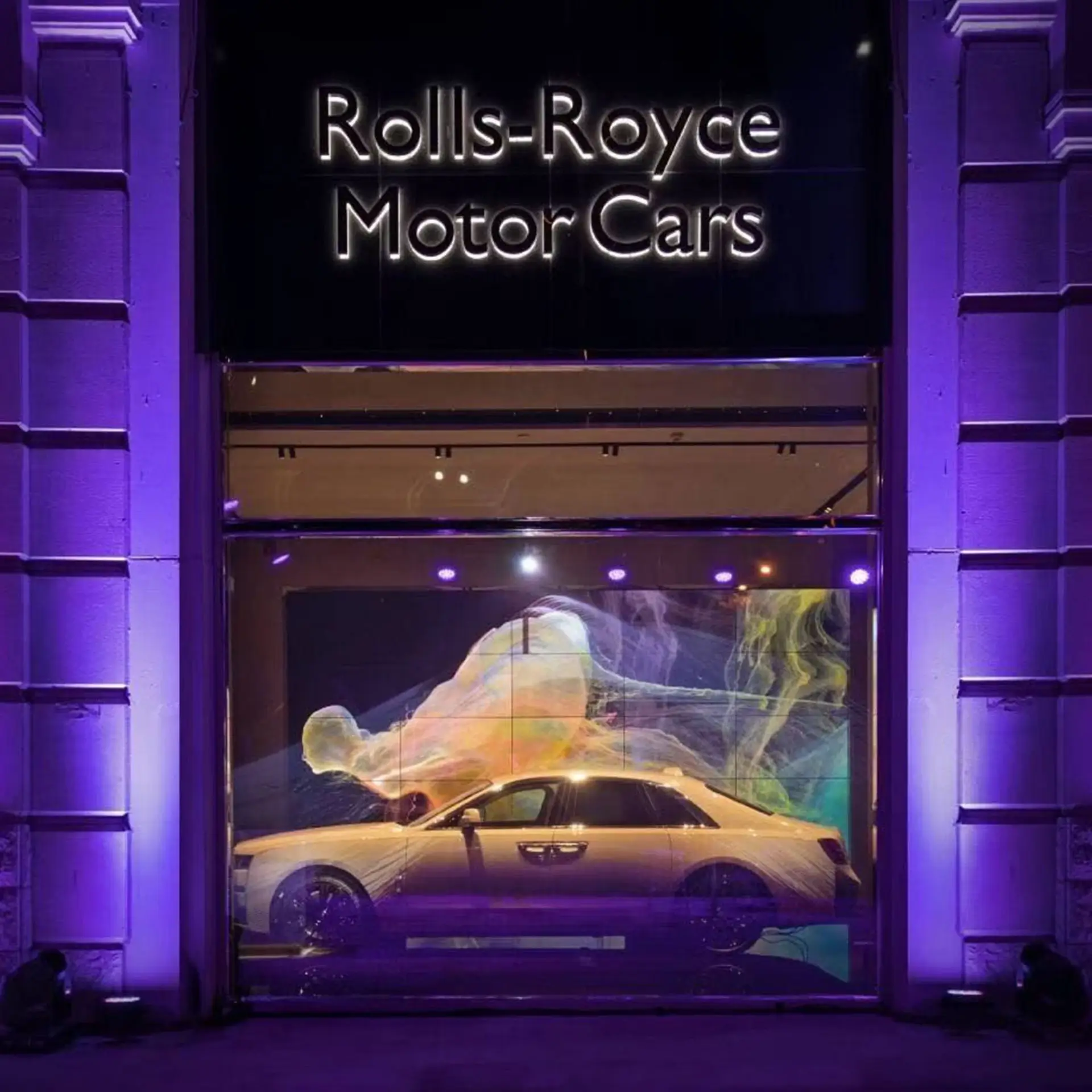
Automotive projection mapping for Rolls-Royce
Before the opening of the Rolls-Royce boutique on Jinbao Street in Beijing, the view from the street ended at three windows. Rolls-Royce China wanted the interior kept out of sight until the ceremony.
We designed a veil of moving lines that extended across the three windows. One of the forms was a three-dimensional ribbon composed of fine pink and silver lines. We used procedural methods to shape the forms and set those forms in motion across the windows. The movement changed gradually across the width of the frontage so the three windows held together as one image.
The storyboard for the Rolls-Royce opening shows where the animation had to end. In one frame the projected lines cover the windows. In the next, dark fabric falls away in a kabuki drop and the interior comes into view. We delivered the projection content as a fixed sequence timed to that physical cue. Inside the boutique, a Rolls-Royce Ghost stood beside the projected RR monogram.
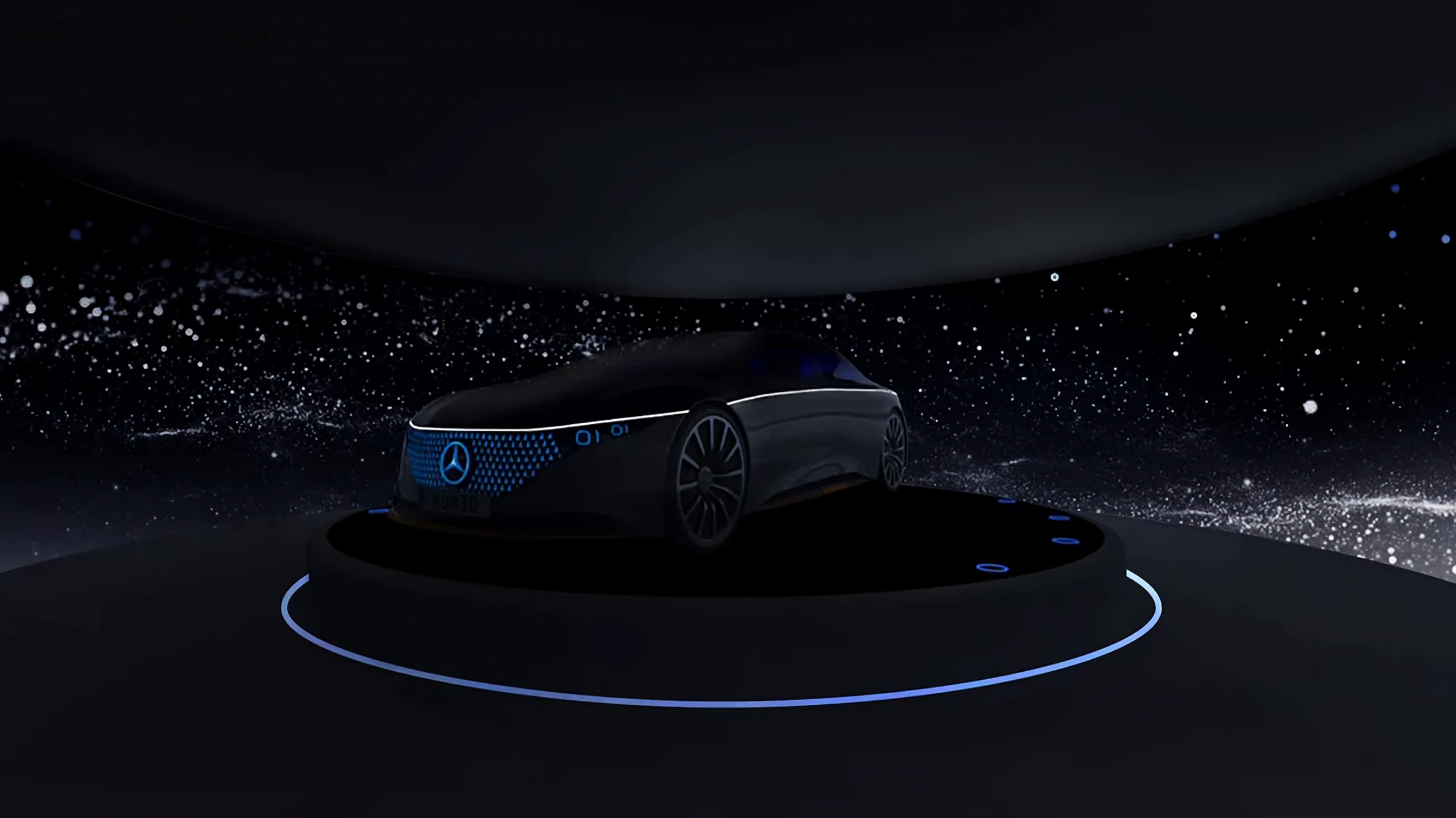
Mercedes-Benz EQS roadshow pavilion concept
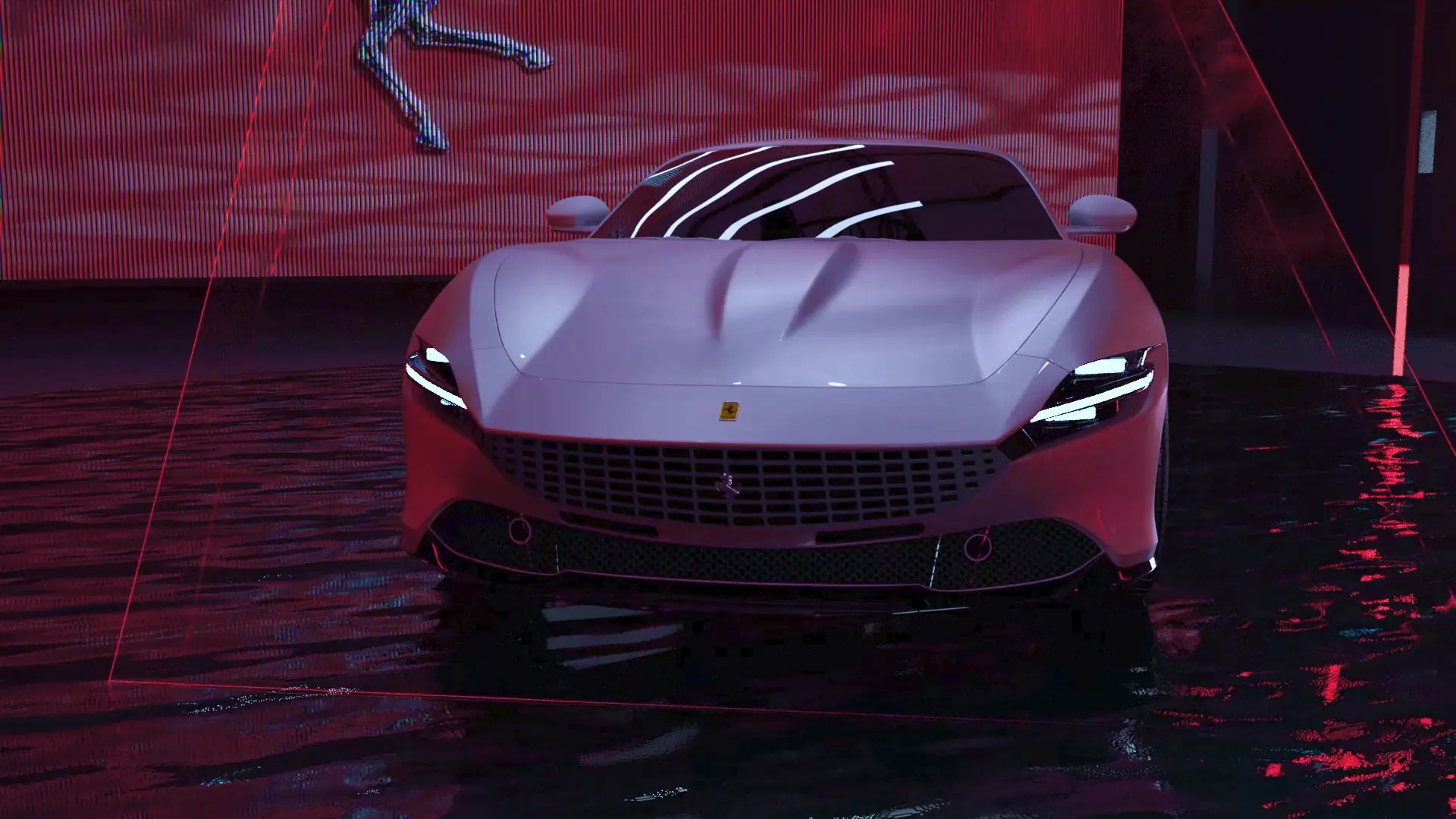
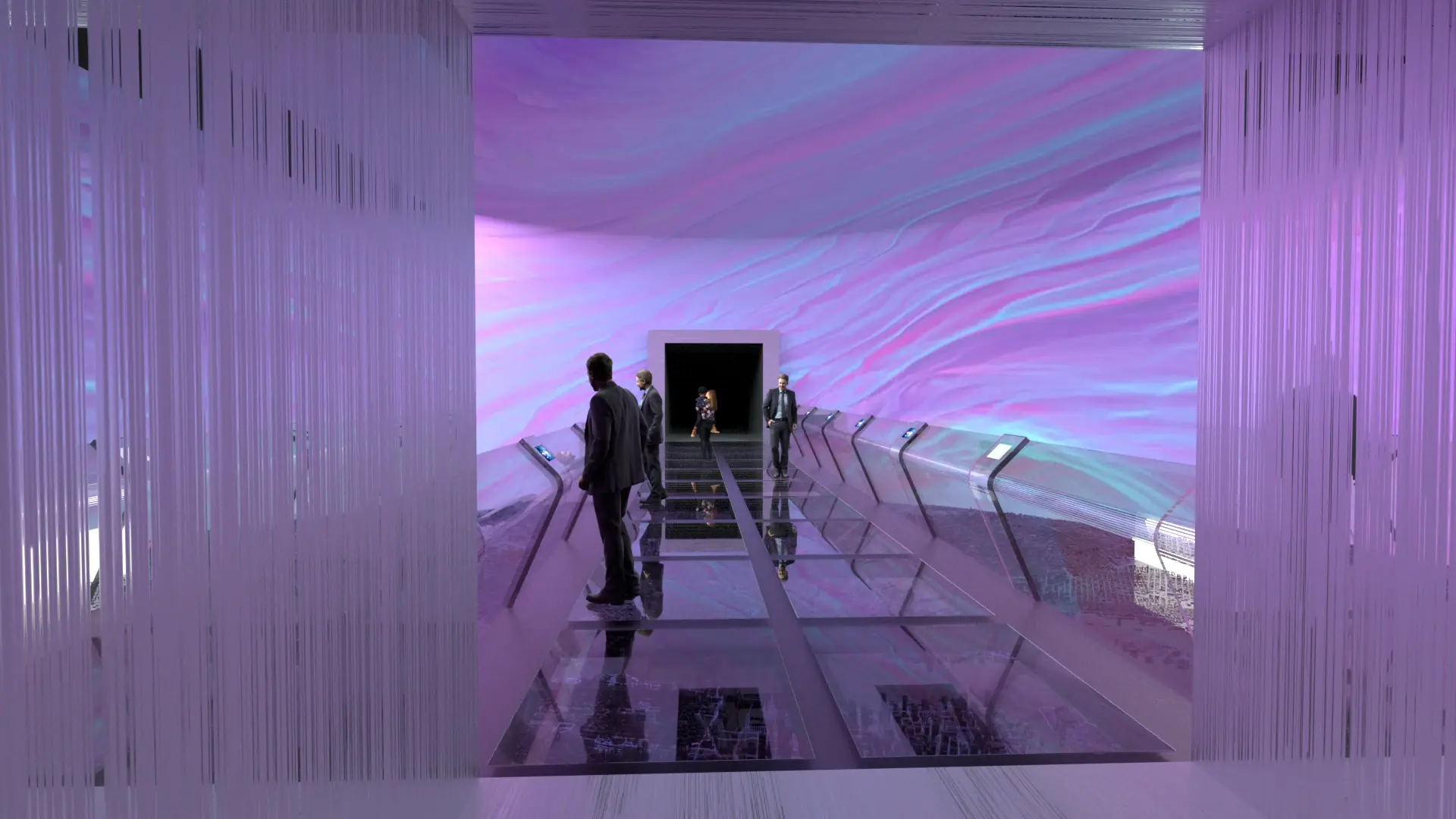
For the Mercedes-Benz EQS roadshow concept in China, we designed the visitor’s approach to the vehicle. A digital forest marked the outer edge of the proposed pavilion. From there, programmable light would lead visitors towards the car, with parametric forms continuing from the forest into the space around the EQS.
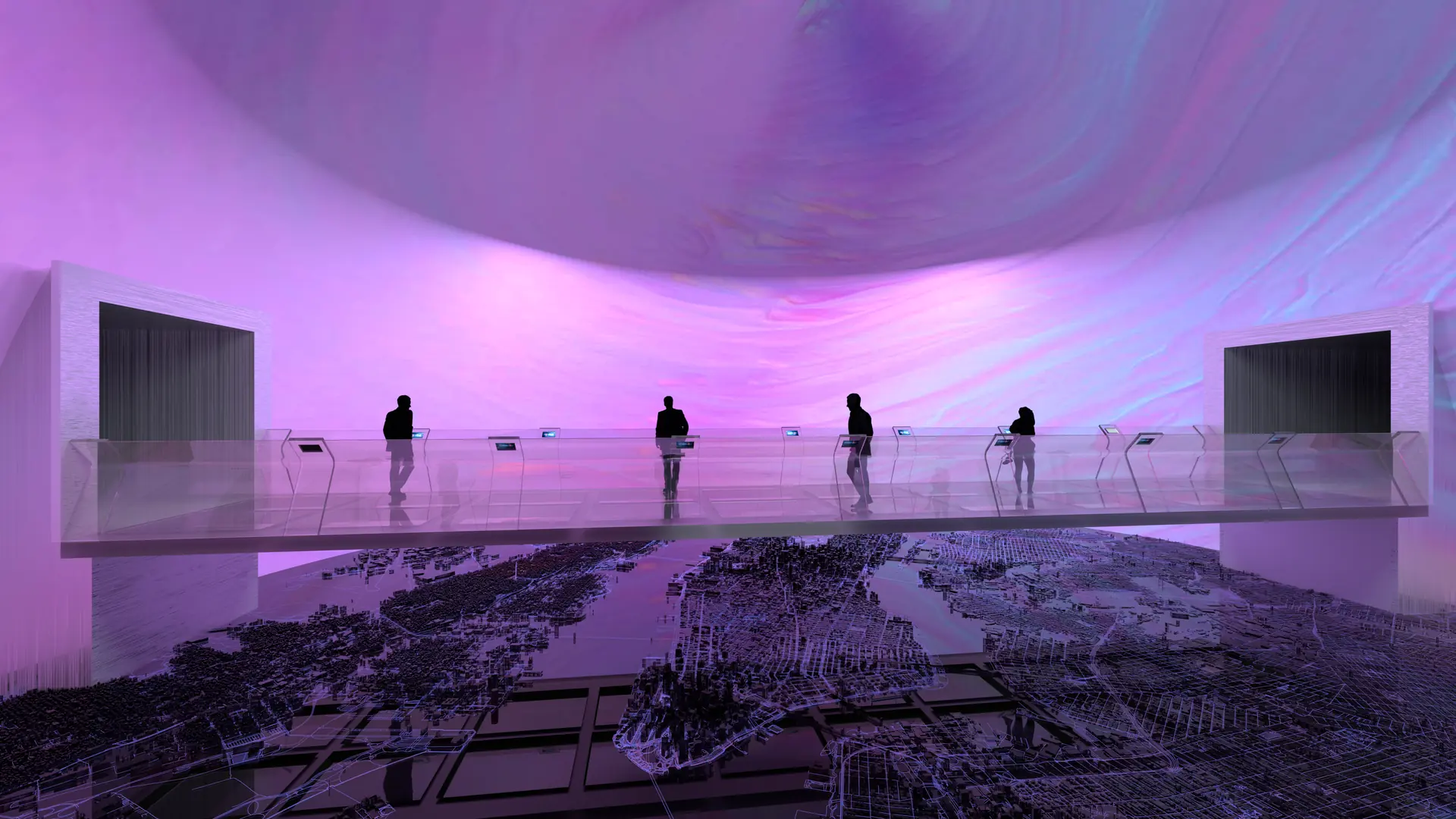
We conceived the route as an immersive experience around the car. Panoramic projection would surround the vehicle, while interactive stations along the route would introduce different product states.
A second version of the concept set a circular platform at the centre of a square pavilion. The EQS would sit on the platform beneath a translucent dome, with trees and columns of light standing in shallow water around it. A textured parametric façade would enclose the pavilion.
For the handover to production, we brought the architectural drawings together with the concept deck, content and lighting direction, and specifications for the interactive stations.
Concepts and renderings
Timing in automotive brand experiences
When a projection ends with a physical reveal, we design the movement around the moment the audience gets its first clear view. On Jinbao Street, the fall of the fabric determined that moment. That end point let us set the pace in advance, including how gradually one field of lines would give way to the next.
At Lexus A-Un, part of the timing came from the people present. The progression from spring to winter gave the animation a longer arc, while biometric input could change its movement from one moment to the next. Rolls-Royce received a sequence ready to play for the ceremony. For Lexus we wrote the behaviour of an animation that would continue to take input as it ran.